- HOME
- Inside the hospital
- Treatment details
- treatment cost
- Infertility treatment explained through videos
- Frequently asked questions
- Staff Recruitment
Treatment details
We will introduce the medical services offered at Takahashi Women’s Clinic .
Treatment flow and main treatment menu
Treatment flow at our hospital
- First appointment
- Initial consultation and basic examination
- Explanation and consultation of treatment details
Decision on treatment policy and plan - Treatment (general infertility treatment, advanced reproductive medicine)/support system
- Graduation
*We do not accept women over 50 years old, or those undergoing laparoscopic surgery or egg donation.
Basic Examination
Measure your basal body temperature every morning to see if you are ovulating and how long your high temperature period is.- Hormone testing
blood tests to check ovarian function. - Hysterosalpingography (HSG)
is a test to check the shape of the uterus and the patency of the fallopian tubes.
A thin catheter is inserted into the uterus, contrast medium is injected, and an X-ray is taken. - Anti-Mullerian hormone (AMH)
blood tests are used to check ovarian age (ovarian reserve function). - Semen analysis
: Semen is collected and examined for sperm count, shape, and other conditions. - Ultrasound examination
, presence or absence of uterine fibroids or ovarian cysts
, observation of monthly follicle development
, and prediction of ovulation date - Hysteroscopy (hysteroscopy)
A thin camera called a hysteroscope is inserted into the uterus to check for endometrial polyps and submucosal fibroids. - Antisperm antibody test:
A blood sample is taken to check for the presence of antibodies that block sperm movement. - Chlamydia antibody and antigen tests:
Chlamydia infection can cause adhesions in the fallopian tubes.
Antibody tests use blood samples to check for past infection, while antigen tests use cervical mucus samples to check for current infection.
treatment
It is common to start with a timing method that is close to nature and then progress every six months.
Image of step-up treatment
- Timing therapyIf you are relatively older, we recommend stepping up without waiting six months.
- artificial inseminationIf there is a significant sperm shortage or the woman is older, artificial insemination may be skipped.
- in vitro fertilizationWe recommend that women aged 36 or older start treatment early if they have abnormalities in both fallopian tubes, severe endometriosis, or decreased ovarian function.
General infertility treatment
Timing therapy
This is a method to predict the day of ovulation and advise on the timing of sexual intercourse.
Artificial insemination (AIH)
This is a method of medically assisted sperm injection into the uterus. It is recommended for those with low sperm count or who have difficulty having sexual intercourse. At our clinic, we wash and concentrate the semen, and select sperm with high motility for injection.
Ovulation-inducing drugs may also be used in combination.
Combined use of ovulation-inducing drugs
Those who have irregular periods, those who have difficulty in getting their period, or those who have a short high temperature phase often have trouble ovulating, so ovulation-inducing drugs are used in combination with timing therapy or artificial insemination. Ovulation-inducing drugs may also be used in those with unknown causes to increase the number of ovulations.
Advanced Reproductive Technology (ART)
In vitro fertilization (IVF)/embryo transfer (ET)
This is a treatment method in which eggs (egg collection) extracted from the ovaries are mixed with sperm in a petri dish (plastic dish) and fertilized, and the fertilized eggs (embryos) are then grown for a few days and returned to the uterus (embryo transfer).
- The main target patients are those who have undergone artificial insemination 5 to 6 times, those with problems with their fallopian tubes, and those with very low sperm counts.
- It is recommended that older people, those with reduced ovarian function, and those with endometriosis start treatment early.
Intracytoplasmic sperm injection (ICSI)
Also known as intracytoplasmic sperm injection, this is a procedure in which sperm are injected directly into the egg under a microscope.
Embryo freezing/thawing and embryo transfer
This method involves freezing the embryos that have been fertilized by the egg and sperm, and then thawing (melting) them in the next cycle or later and returning (transferring) the embryos.
Implantation failure test
What is implantation failure?
This refers to the situation where pregnancy does not occur even after three or more transfers of high-grade embryos (blastocyst BB or higher).
Generally, the biggest cause of non-implantation is chromosomal abnormalities in the embryo (in people in their 40s, only about 20% of blastocysts have normal chromosomes). Therefore, tests are being attempted, mainly for people under 40, to examine the endometrial environment as a factor in embryo acceptance, tests to examine immune balance, and tests to determine the timing of implantation.
What tests are there for implantation failure?
We offer the following tests at our clinic:
- Hysteroscopy:
Observes for the presence of endometrial polyps, uterine fibroids, adhesions in the uterine cavity, and chronic endometritis. - Chronic endometritis test:
Endometrial tissue is collected and examined for the presence of inflammatory cells. If chronic endometritis is present, treatment with antibiotics is performed. It has been reported that the implantation rate of IVF increases after treatment. - Intrauterine flora test: This test
checks whether the balance of bacteria in the uterus is appropriate. The ideal ratio of bacteria (Lactobacillus: lactic acid bacillus) that maintain a healthy environment in the uterus is 80% or more. - Immune function test:
If the immune system is too strong, there is a possibility that the embryo will be rejected, so we examine the immune function called Th1/Th2 through blood tests. If the immune system is too strong, we will administer immunosuppressants orally. - ERPeak (Endometrial Embryo Receptivity Test)
checks whether the implantation window (the period when the endometrium can accept an embryo) has shifted, and if it has, the embryo will be transferred 1-2 days later.
There are many unknowns about implantation, but our hospital uses cutting-edge testing to improve the success of in vitro fertilization.
Preimplantation testing
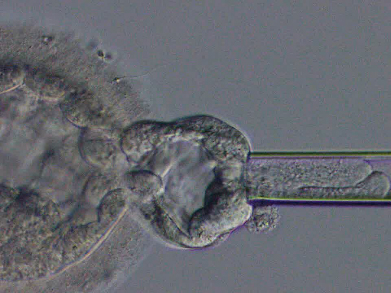
What is preimplantation testing?
Preimplantation Genetic Testing (PGT) is a test in which a part of the fertilized egg (embryo) obtained through in vitro fertilization is collected and the chromosomes and genes are examined before it is returned to the body. Tests are divided into three types, and our clinic performs PGT-A and PGT-SR.
- PGT-A (Preimplantation Chromosomal Aneuploidy Testing)
aims to reduce the risk of ART*1 failure or miscarriage caused by accidental abnormalities in the number of chromosomes (numerical abnormalities).<Conditions for inspection>- Those who have not achieved clinical pregnancy in more than two previous embryo transfers
- Those who have had two or more miscarriages in the past
- Women aged 35 and over
- PGT-SR (Preimplantation Chromosome Structural Testing)
The purpose is to reduce the possibility of miscarriage in couples who have experienced repeated miscarriages due to abnormalities in the structure of chromosomes.- Those with infertility or recurrent pregnancy loss due to chromosomal structural abnormalities in either spouse
- PGT-M (preimplantation genetic testing)
The purpose is to check for genetic abnormalities in the fertilized egg when there is a possibility that a genetic mutation in the couple may cause the baby to have a serious genetic disease.
*PGT-M is not performed at our hospital.
Advantages and disadvantages of preimplantation testing
meritBy excluding embryos with numerical chromosomal abnormalities from those to be transferred, it is expected that the risk of miscarriage will be reduced and the pregnancy rate per embryo transfer will be improved.Disadvantages
- Removing cells for testing can potentially damage the embryo.
- The accuracy of the test is not 100%.
(Because cells are collected from the area that will later become the placenta, it may not be possible to determine chromosomal abnormalities in the fetus.)
Flow of preimplantation testing
If you have not visited our clinic before, please make an appointment for your first consultation.
- consultation
- Video viewing
- Genetic counseling (not required for PGT-A, but required for PGT-SR)
- Submit consent form
- Egg collection, embryo biopsy (collection of part of the embryo), embryo freezing
- Doctor explains test results
- Embryo transfer
Cost of preimplantation testing
| Genetic counseling costs | ¥11,000 |
|---|---|
| Preimplantation testing cost (per embryo) | ¥93,500 |
*In addition to the above, there are costs for in vitro fertilization (the cost of a series of treatments from egg collection to pre-implantation testing to embryo transfer), which must be paid in full by the patient. For more information, please see “About Fees” on this website.
Things to keep in mind
- Preimplantation testing is only available to those who are able to undergo embryo transfer at our clinic.
- Please note that we do not accept patients who wish to undergo preimplantation testing only without undergoing embryo transfer at our clinic.
surgery
We perform surgery to remove the cause of infertility at our clinic.
Patients can undergo treatment smoothly according to their physical condition and wishes, without having to interrupt infertility treatment before and after surgery or restart it.
Hysteroscopic surgery (resectoscope)
We perform same-day hysteroscopic surgery (resectoscope) for endometrial polyps, submucosal fibroids, uterine septum, and intrauterine adhesions, which can cause infertility due to implantation failure, habitual miscarriage, and
infertility .
tubal surgery
Fallopian tube surgery under endoscopic guidance (FT catheter)
For those with blocked fallopian tubes, we use an FT catheter to push open the tubes and open them (success rate is about 70%). There
are only a few facilities in the prefecture that perform this procedure, and our hospital performs the surgery on an outpatient basis. Click here
to see our surgical results.
Selective hysterosalpingography
If a hysterosalpingogram (HSG) reveals blockage of the fallopian tubes (interstitial portion), a special catheter is placed at the tubal opening to open the tubes on the spot.
Recurrent miscarriage
Recurrent pregnancy loss is defined as a condition in which a woman becomes pregnant but has had two or more consecutive miscarriages or stillbirths and is unable to conceive a child. In particular, three consecutive miscarriages are called habitual miscarriages. At our hospital, we recommend the following tests to check for recurrent pregnancy loss and habitual miscarriage.
- Presence or absence of systemic diseases such as diabetes or thyroid disease
*Our hospital also provides internal medicine services, so we can treat systemic diseases at the same time. - Blood coagulation test
- Hysteroscopy: Checks for uterine malformations and submucosal fibroids.
- Chromosome analysis of the two
Male infertility (urology)
Half of the causes of infertility are male-related.
First, a semen test is performed, but if there are any problems, a male examination and detailed sperm testing by a urologist are also necessary.
At our clinic, Professor Ichikawa of the Department of Urology at Chiba University will be available to see patients on Tuesdays and Saturdays, and will perform ultrasound examinations and prescribe medication.
General examinations and tests for men
- Palpation : testicular size, presence or absence of varicocele
- Semen re-examination
- Scrotal ultrasound : measuring varicocele blood flow
- Hormone test : male hormones, blood sugar, etc.
Special Inspection
- Chromosome testing (blood) : For those with severe oligozoospermia, chromosome analysis will be performed on blood.
- Special sperm tests
: Kruger test (precise sperm morphology test)
, sperm DNA fragmentation test (DFI test)
, sperm oxidative stress test (Myoxis)
surgery
- Testicular Sperm Extraction (TESE):
For those with azoospermia, tissue is extracted from the testicles to search for sperm. If sperm are found, they are frozen and stored, with the aim of insemination via ICSI at a later date. This is a same-day surgery under local anesthesia.
*If same-day surgery is difficult, the patient will be referred to Chiba University for inpatient surgery. In this case, the sperm will be transported and stored at our hospital.
If blood flow is poor during varicocele surgery , you will be referred to Chiba University and will be hospitalized for surgery.
18-14 Shinmachi, Chuo Ward, Chiba City, Chiba Prefecture, 260-0028Chiba Shinmachi Building 6th floorTel. 043-243-8024 / Fax. 043-204-3338